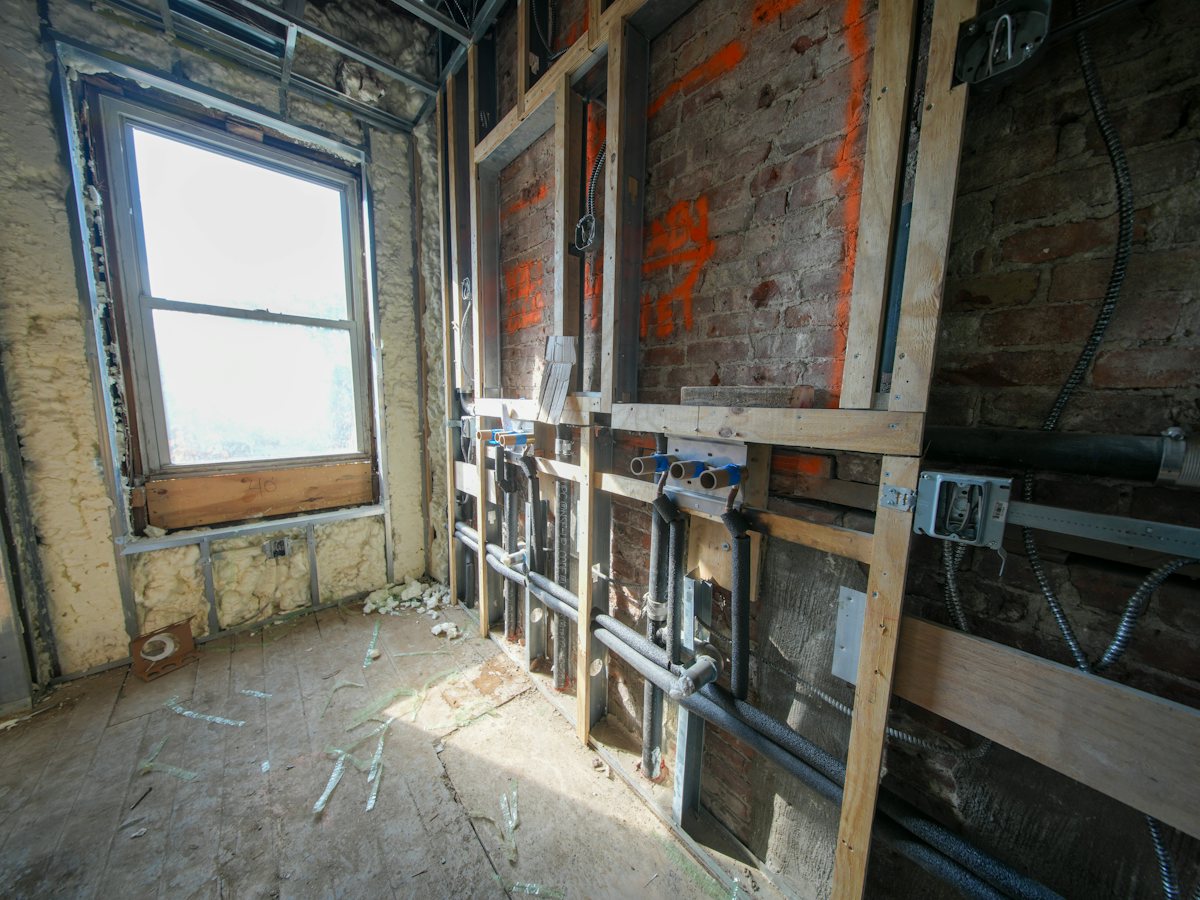
Does rewiring mean tearing out every wall?
No. Many rewiring jobs in Knoxville cover a few circuits, one floor, or only the rooms being remodeled. And even whole-house jobs rarely mean gutting walls. Electricians fish new cable through walls and ceilings from the attic, basement, or crawl space, cutting small access holes only where they have to. Plaster walls in older homes take more care than drywall, but the approach is the same.
What does a rewiring job involve?
- Survey. The electrician opens outlets, switches, and fixtures, checks the panel, and looks in the attic, basement, and crawl space to see what wiring is there and what shape it's in.
- Plan. You decide together what gets replaced now and what can wait. The oldest or most troublesome circuits usually go first.
- Permit. Rewiring needs an electrical permit. Inside Knoxville city limits it comes from the City of Knoxville.
- New cable is run to each outlet, switch, and fixture on the circuits being replaced.
- New boxes and devices, including grounded outlets where there were two-prong ones.
- Protection with the breakers current code calls for, such as AFCI and GFCI protection in the right rooms.
- Old wiring disconnected so it can never be re-energized. It's usually left in the walls, which is normal.
- Inspection before the access holes are patched.
Rewiring often goes hand in hand with a panel upgrade, especially when the old panel is a fuse box or doesn't have room for the new circuits.
How do you know your house needs rewiring?
Look for:
- Knob-and-tube wiring, with porcelain knobs and tubes visible in the attic or basement
- Cloth-covered wire that flakes or crumbles when it's moved
- Two-prong outlets throughout, or three-prong outlets with no ground behind them
- Dull gray aluminum wire at outlets and switches in a house from the late 1960s or early 1970s
- Frequent tripped breakers or blown fuses
- Flickering or dimming in several rooms
- Warm outlets or switches, or scorch marks around them
- An inspection report or insurance company that flags the wiring
- A remodel that's opening walls and ceilings anyway
Why is old wiring so common in Knoxville?
Age. About 12 percent of Knoxville homes were built before 1940 and about 32 percent between 1940 and 1969, according to NeighborhoodScout. Neighborhoods like Fourth and Gill, Old North Knoxville, Parkridge, Island Home Park, and older parts of Fountain City and Sequoyah Hills have many houses from the era of knob-and-tube and early cloth-sheathed cable.
Wiring from those decades has a few common problems:
No ground. Knob-and-tube and early two-wire cable have no ground conductor, so surge protectors and three-prong appliances don't get the protection they're designed for.
Brittle insulation. Rubber and cloth insulation dries out over decades, especially in hot attics. East Tennessee summers bake attic space, and brittle insulation can crack and expose conductors.
Buried or covered splices. Knob-and-tube was designed to shed heat into open air. Blown-in attic insulation packed around it changes that.
Aluminum branch wiring. Some homes built in the late 1960s and early 1970s used aluminum wire for outlet and switch circuits. It isn't automatically dangerous, but connections loosen and overheat unless they're made with approved connectors.
A century of changes. Houses that have been owned by a dozen families often have extension-cord-style add-ons, mismatched wire sizes, and splices without boxes.
What affects the cost of rewiring?
Rewiring is priced by scope and access. The main factors:
- How much gets rewired: a few circuits, a floor, or the whole house
- Wall type. Plaster and lath takes more time than drywall.
- Access from an attic, basement, or crawl space. Two-story houses with no basement are slower.
- Number of outlets, switches, and fixtures on the new circuits
- Panel work, if a new panel is needed to hold the new circuits
- Code updates, like AFCI and GFCI protection and smoke alarm circuits
- Patching, and whether it's included or left for your painter
- Permit and inspection fees
Doing it during a remodel, while walls are open, is almost always cheaper than rewiring a finished room later.
Should you repair old wiring or replace it?
Spot repairs make sense when the problem is one damaged run, a bad splice, or a single overheated outlet, and the rest of the circuit is in good shape. For aluminum wiring, a repair often means fixing each connection with approved connectors rather than replacing the wire.
Replacement is the better answer when the insulation is brittle throughout, the circuits have no ground, or problems keep turning up in different rooms. At that point you're paying repeatedly to patch a system that's at the end of its life. A phased plan, a few circuits at a time, can spread the cost out.
Frequently asked questions
Can I live in the house while it's rewired?
Usually, yes. Most rewiring is done a few circuits at a time, so only part of the house loses power during the workday. Whole-house jobs in occupied homes take longer than in empty ones.
Is knob-and-tube wiring illegal in Tennessee?
No. Existing knob-and-tube isn't automatically against code. But it has no ground, its insulation ages poorly, and many insurers and buyers' inspectors flag it, so most owners replace it when they can.
Do I have to remove the old wiring?
No. Old wiring is disconnected and left in place in most jobs. Removing it would mean opening far more wall than necessary.
How long does a whole-house rewire take?
It depends on the size of the house and the access. A small house with a basement and attic can take several days. A large two-story plaster house can take a couple of weeks.
Should I upgrade the panel at the same time?
Often. If the panel is a fuse box, is full, or can't take AFCI and GFCI breakers, doing both at once saves a second round of permits and power outages.
Get an electrician out to your Knoxville home
Call to describe the problem or the project, or send the form. Someone will call back to set a time to look at it.