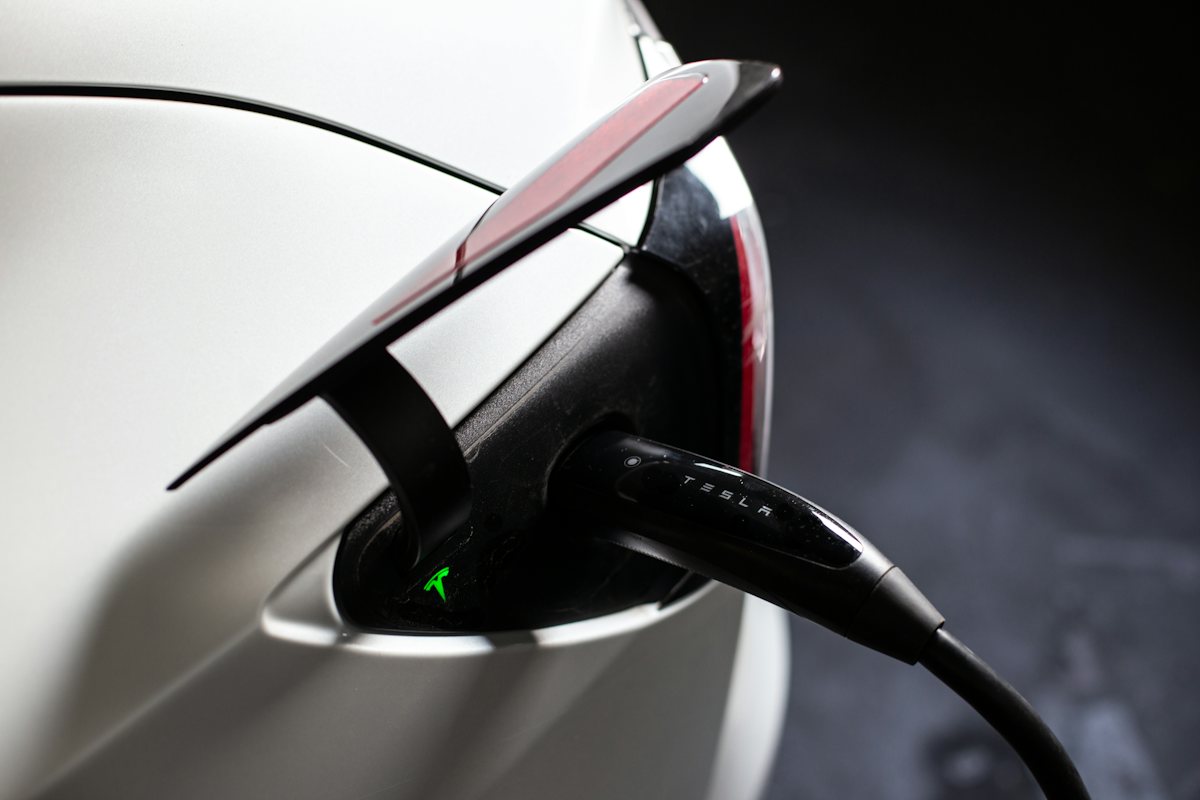
What does installing a home EV charger involve?
Once the plan is set, most installs take part of a day.
- Load check. The electrician looks at your panel's size, open slots, and existing load. A Level 2 charger usually needs a dedicated 240-volt circuit, commonly 40 to 60 amps.
- Hardwired or plug-in. You can wire the charger directly or install a 240-volt receptacle and plug the charger in. The choice depends on the charger, the space, and whether you might change chargers later.
- Route the wire from the panel to the parking spot, through a basement, crawl space, attic, or along the garage wall in conduit.
- Permit. Inside Knoxville city limits, the permit comes from the City of Knoxville. In unincorporated Knox County it comes from the county.
- Install. A new breaker goes in, the circuit is run, and the charger or outlet is mounted and connected.
- Test and inspect. The charger is tested with your car, and the work is inspected.
Detached garages and driveway chargers take more planning. If an outdoor run needs a trench, call 811 before anyone digs so buried utilities get marked.
When does a Level 2 charger make sense?
A regular 120-volt outlet adds only a few miles of range per hour. That's enough for some people. Level 2 is worth it when:
- Your daily driving is more than a short commute, like a run from Farragut or Powell into downtown and back
- Two drivers share the car, or you own two EVs
- A new EV is on the way and you want charging ready the day it arrives
- You're charging through an extension cord, which is a fire risk and should stop
- The outlet you charge from gets warm or trips during long sessions
Why do some Knoxville homes need more work for a charger?
The charger is simple. The house determines how big the job is.
Older panels fill up. Many Knoxville homes built before 1970 still have 100-amp service or less. A Level 2 charger is one of the largest loads in a house, so it may not fit without a panel upgrade or a load management device.
The panel is far from the car. If the panel sits in a basement corner on the far side of the house, the wire run gets long, and long runs can call for heavier wire.
Detached garages need a feeder. Older lots in neighborhoods like Fountain City and Sequoyah Hills often have a garage set back from the house, so power has to be run out to it.
Plug-in setups take a beating. Charging pulls a heavy load for hours. A cheap receptacle or a loose terminal on a 240-volt circuit can overheat. Quality parts and careful installation matter more here than almost anywhere else in the house.
Hillside lots complicate outdoor runs. A lot of Knox County driveways sit on slopes, which can change where a charger goes and how a trench or conduit has to run.
Are there rebates or tax credits for EV chargers in Knoxville?
Be careful with older articles here, because the incentives have changed.
- Federal tax credit: The 30C credit for home charging equipment required the charger to be bought and installed by June 30, 2026, according to Rewiring America. A charger installed after that date doesn't qualify. Ask a tax professional about your own situation.
- KUB rates: KUB offers time-of-use and electric vehicle charging rates for residential customers, according to the City of Knoxville's EV page. Call KUB at 865-524-2911 to see whether one fits how you charge.
Rebate programs come and go. Check with KUB or your local utility before you buy a charger, so you know what's offered now.
What affects the cost of an EV charger installation?
Mostly the house. The main factors:
- Panel capacity. If the panel can take a new 240-volt circuit as is, the job stays small. If not, a load management device or a panel upgrade adds to it.
- Distance from the panel to where you park, and how the wire has to get there.
- Finished walls and ceilings that slow down the wire run.
- Hardwired charger or receptacle. The labor is similar, but the parts differ.
- Indoor or outdoor. Outdoor chargers need weather-rated equipment and sometimes a trench.
- The charger, if the electrician supplies it.
- Permit and inspection fees.
Ask whether the estimate includes the breaker, wire, receptacle or charger, and the permit.
Should you add a circuit or upgrade the panel first?
If the panel has open space and the load calculation leaves room, a dedicated circuit is the simplest path. Many homes with gas heat and a gas water heater fall in this group.
If the panel is full, the service is 100 amps or less, or you're also planning a heat pump, a hot tub, or a second EV, upgrading first usually makes more sense than squeezing a charger in. Load management devices, which pause charging when the rest of the house is drawing a lot, can sometimes delay an upgrade. The load check at the start tells you which path fits.
Frequently asked questions
How long does a home EV charger installation take?
A few hours to a day once the permit is in hand. Jobs that need a panel upgrade, a feed to a detached garage, or a trench take longer.
Should I hardwire the charger or use a plug-in outlet?
Hardwired chargers can often run at higher power and have fewer connection points to wear out. A plug-in setup with a NEMA 14-50 receptacle makes it easier to swap chargers later. Either way, the circuit has to be sized for the charger.
Do I need a permit for an EV charger in Knoxville?
Yes. A new 240-volt circuit needs an electrical permit. Inside city limits it comes from the City of Knoxville, and the electrician handles it as part of the job.
Is the federal EV charger tax credit still available?
Not for new installs. The 30C credit required the charger to be installed by June 30, 2026. Chargers installed after that don't qualify.
Can I just charge from a regular outlet?
You can, with the cord that came with the car, if the outlet is in good shape and isn't shared with other heavy loads. It's slow, and it puts a long, steady load on the outlet, so a worn outlet should be replaced first.
Get an electrician out to your Knoxville home
Call to describe the problem or the project, or send the form. Someone will call back to set a time to look at it.